Stationery & Art Prints
Built for prints, posters, notebooks and cards, where paper stock and true size decide whether the order sticks.
How the sequence works.
Shoppers move through a listing in order, and each frame has a job to do before the next one matters. Here is what every shot in this template is for, and what it costs you to leave it out.
- Required
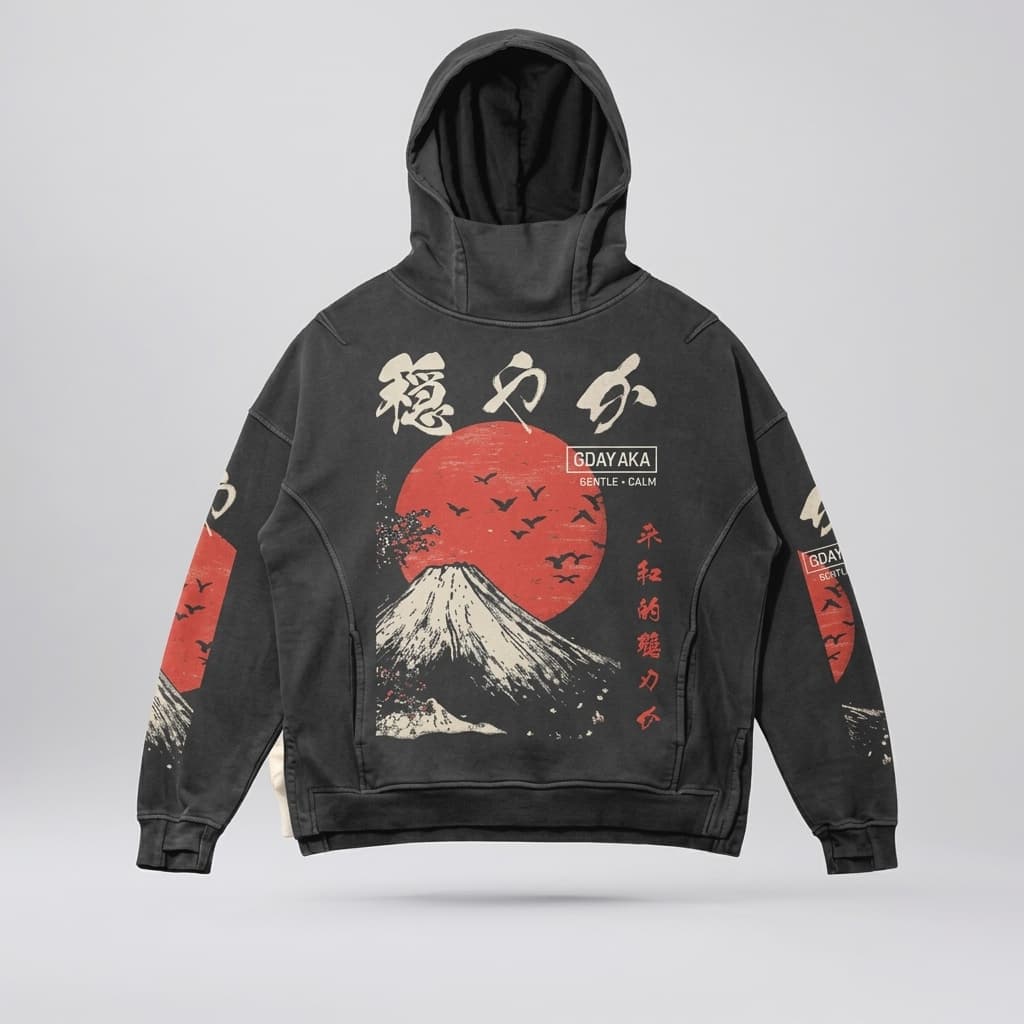
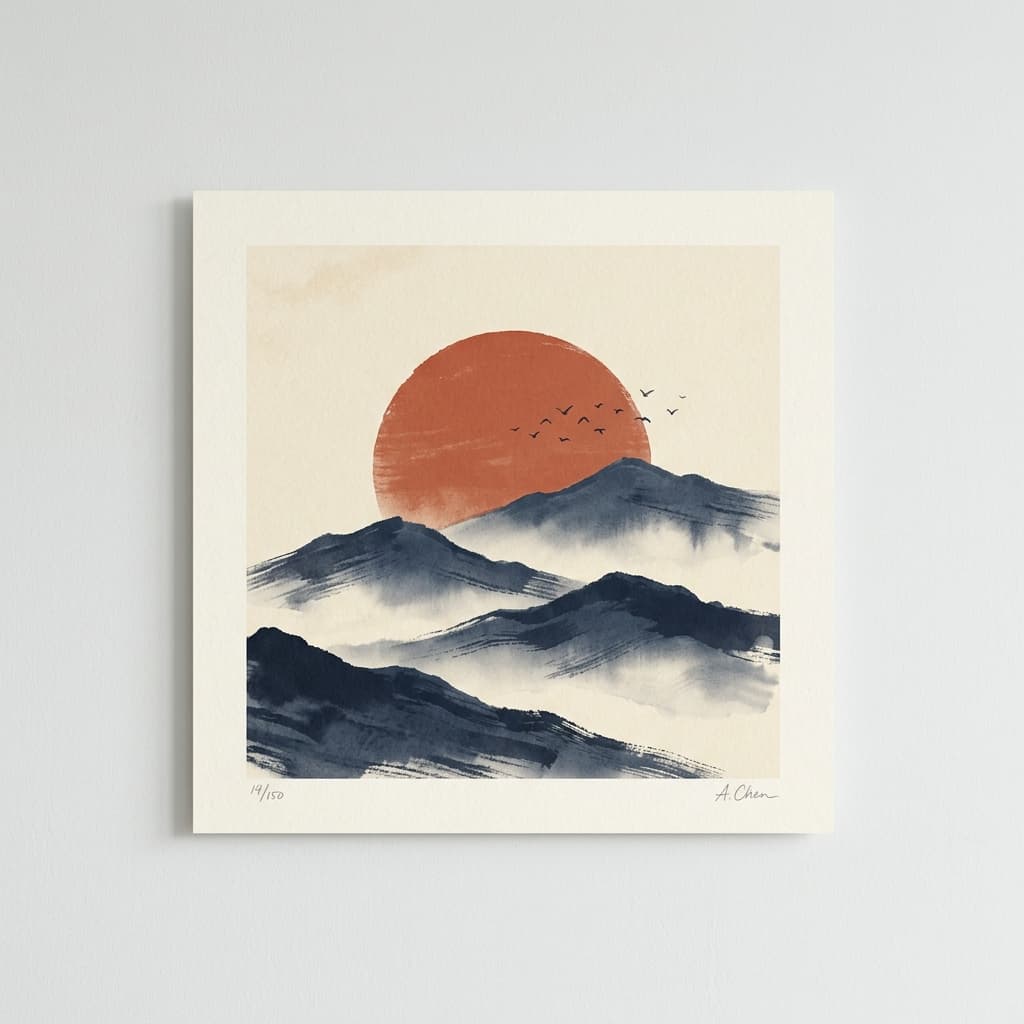
Hero Shot
One centred product on a plain background, prints shot flat and square-on with no props.
This is the frame that wins the click in search and collections, so it has to survive as a thumbnail. Shoot flat and square-on against a plain ground — perspective skew on a print reads as a cheap listing before the shopper has even zoomed.
 Required
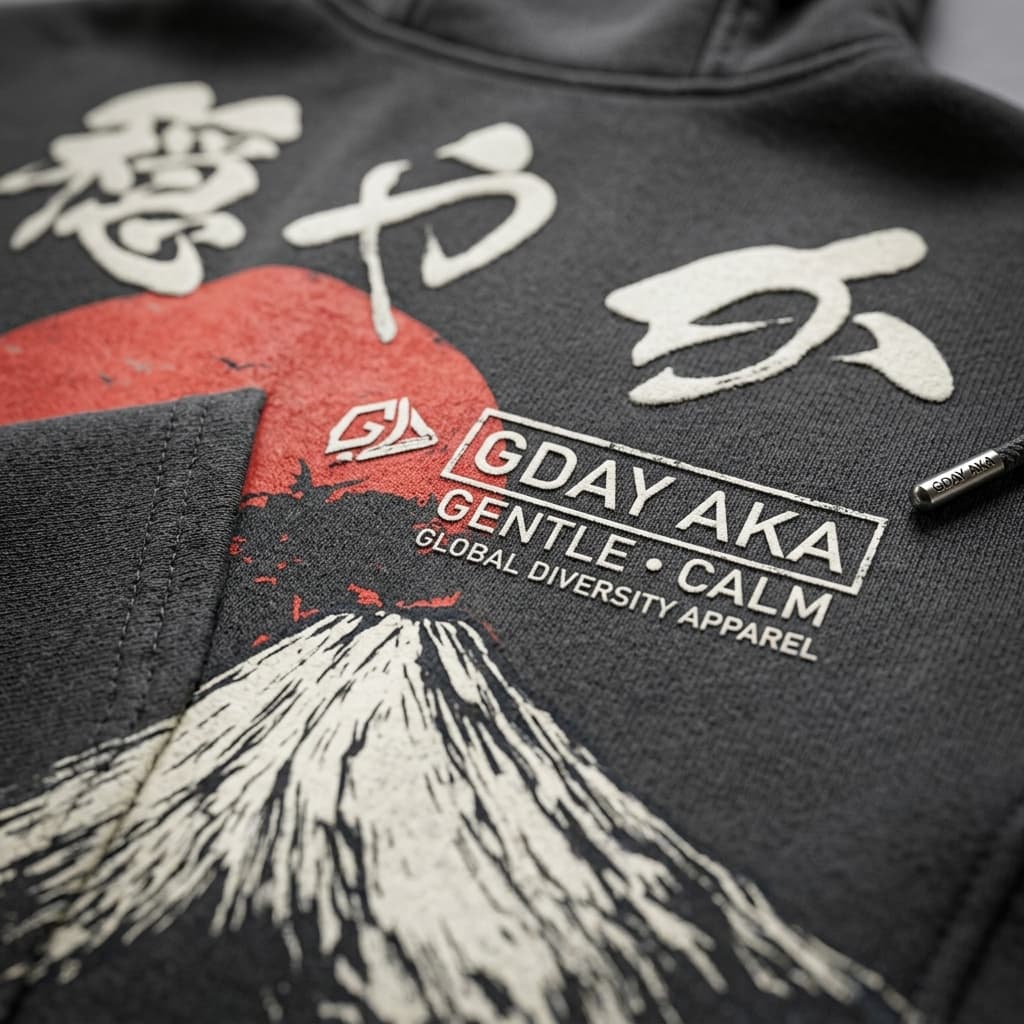
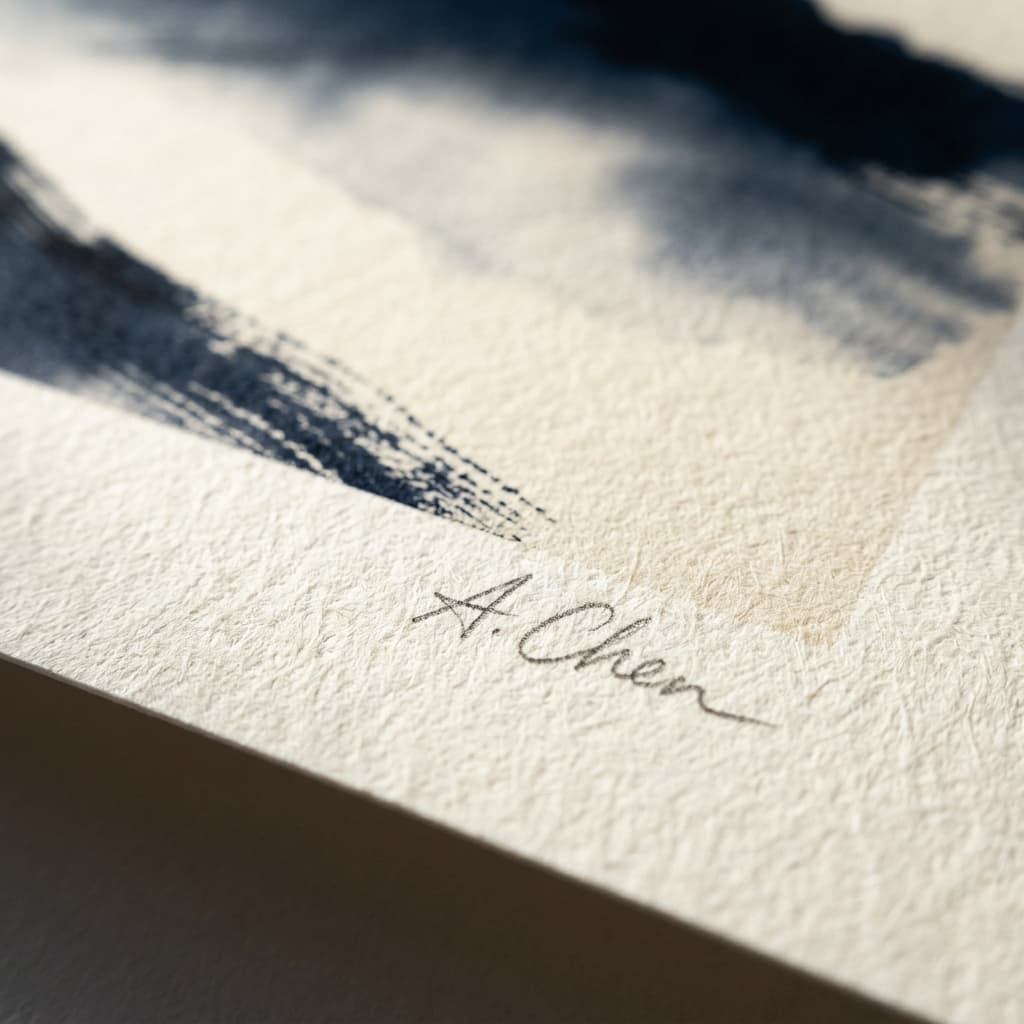
Paper / Print Quality Close-Up
Macro of paper grain, foil, binding or edge, lit with raking light so the surface reads.
Paper is the thing a buyer most wants to touch and cannot. A macro under raking light, showing grain, foil or a deckled edge, is what separates a fine art print from a poster in the shopper’s mind.
 Optional
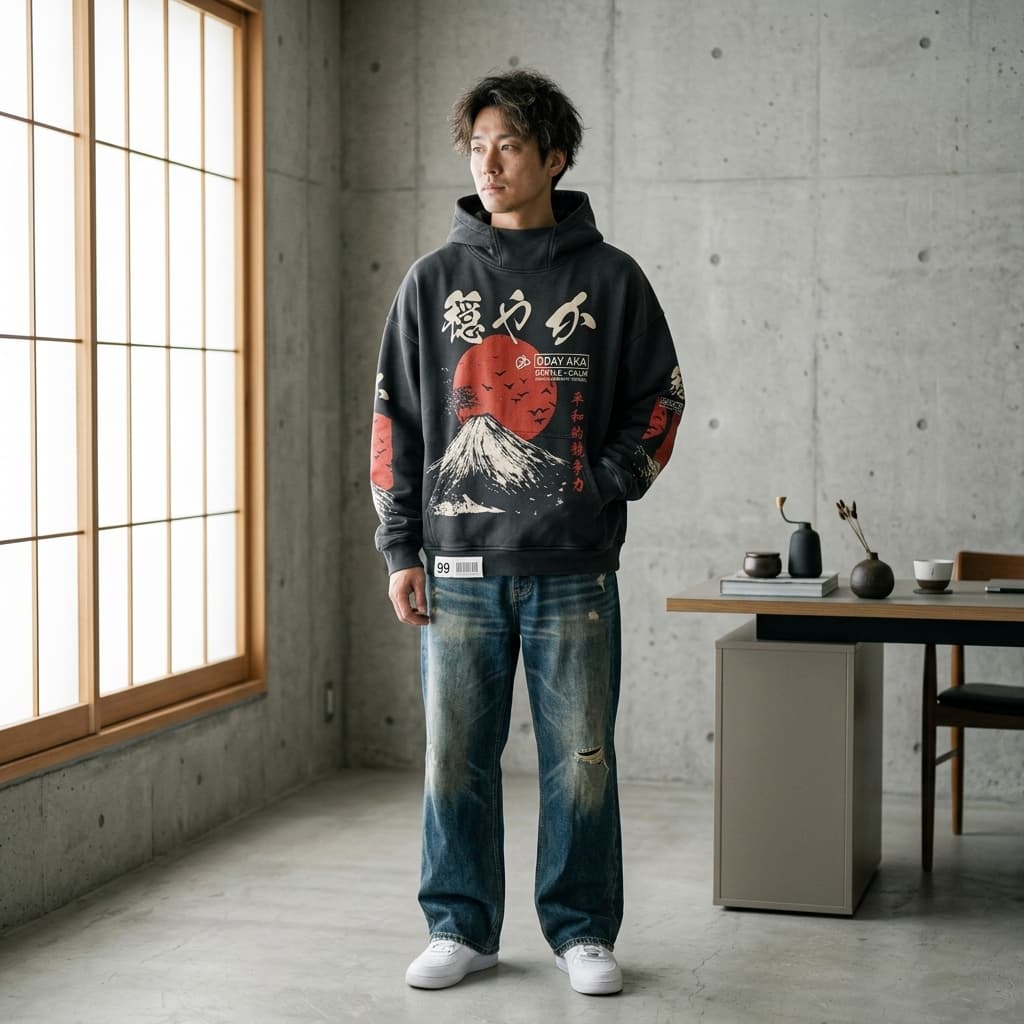
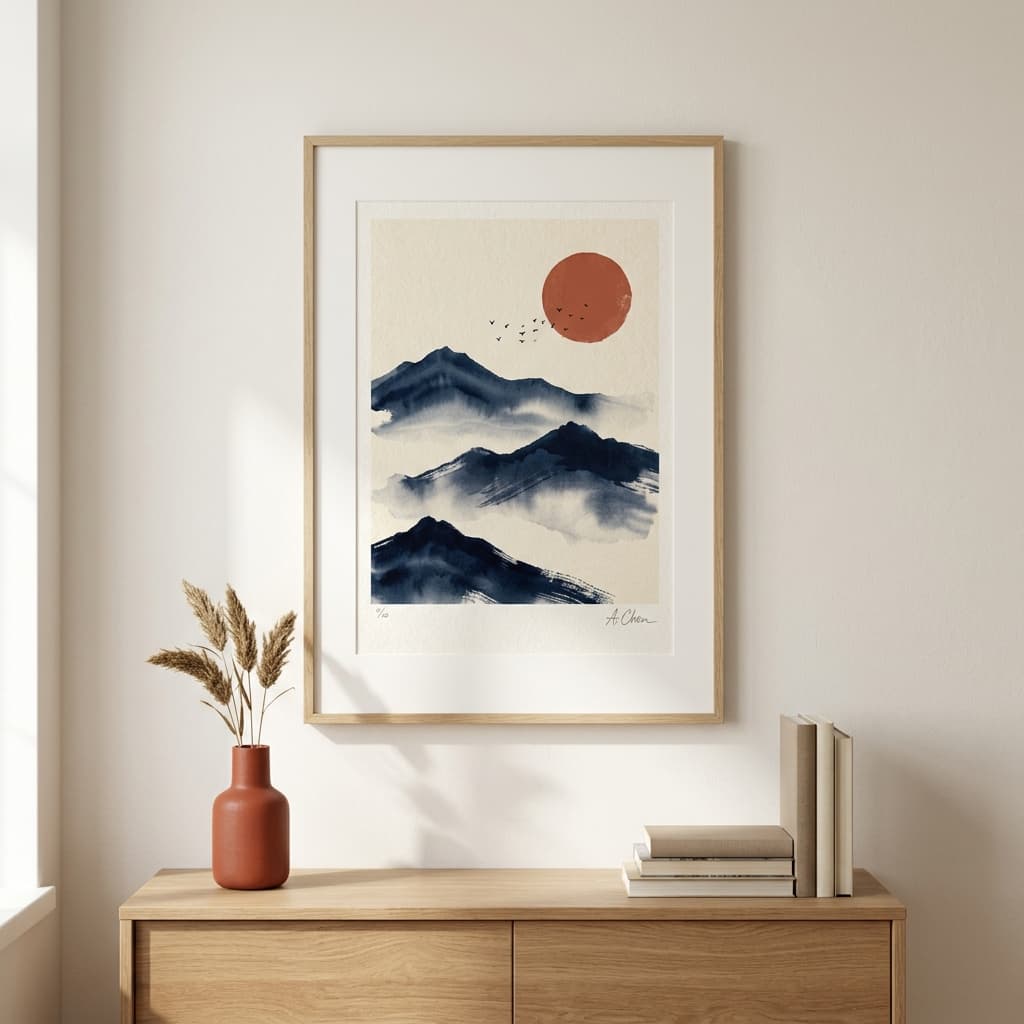
Styled Scene
Framed on a wall, or an overhead desk flat lay with two or three props at most.
Nobody buys a sheet of paper; they buy the wall it hangs on or the desk it sits on. Keep it to two or three props so the product stays the subject rather than set dressing.
 Optional
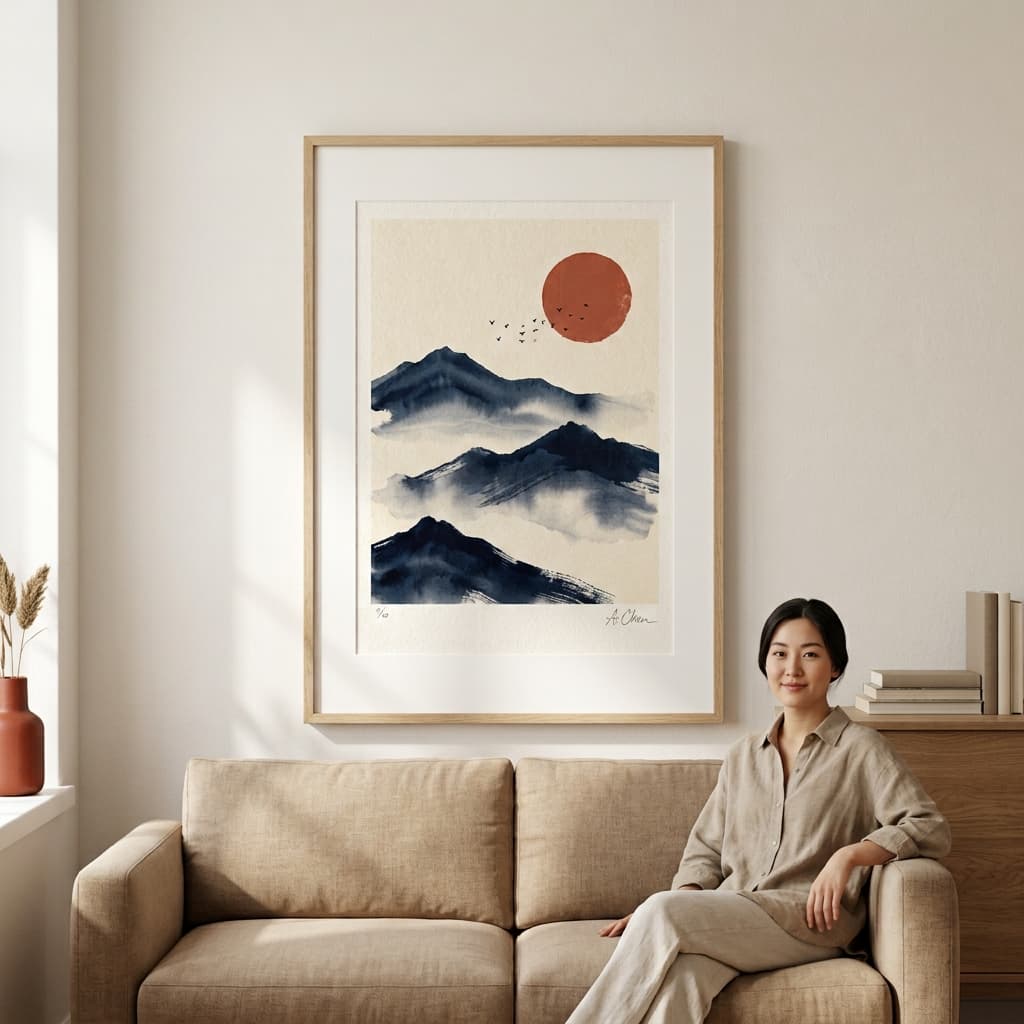
Scale / Size Context
Proportions against a hand, desk or wall so the real dimensions read at a glance.
Size is the most common misunderstanding in this category, and the most common return with it. A hand, a desk or a piece of furniture in frame settles it before the order rather than after.
 Optional
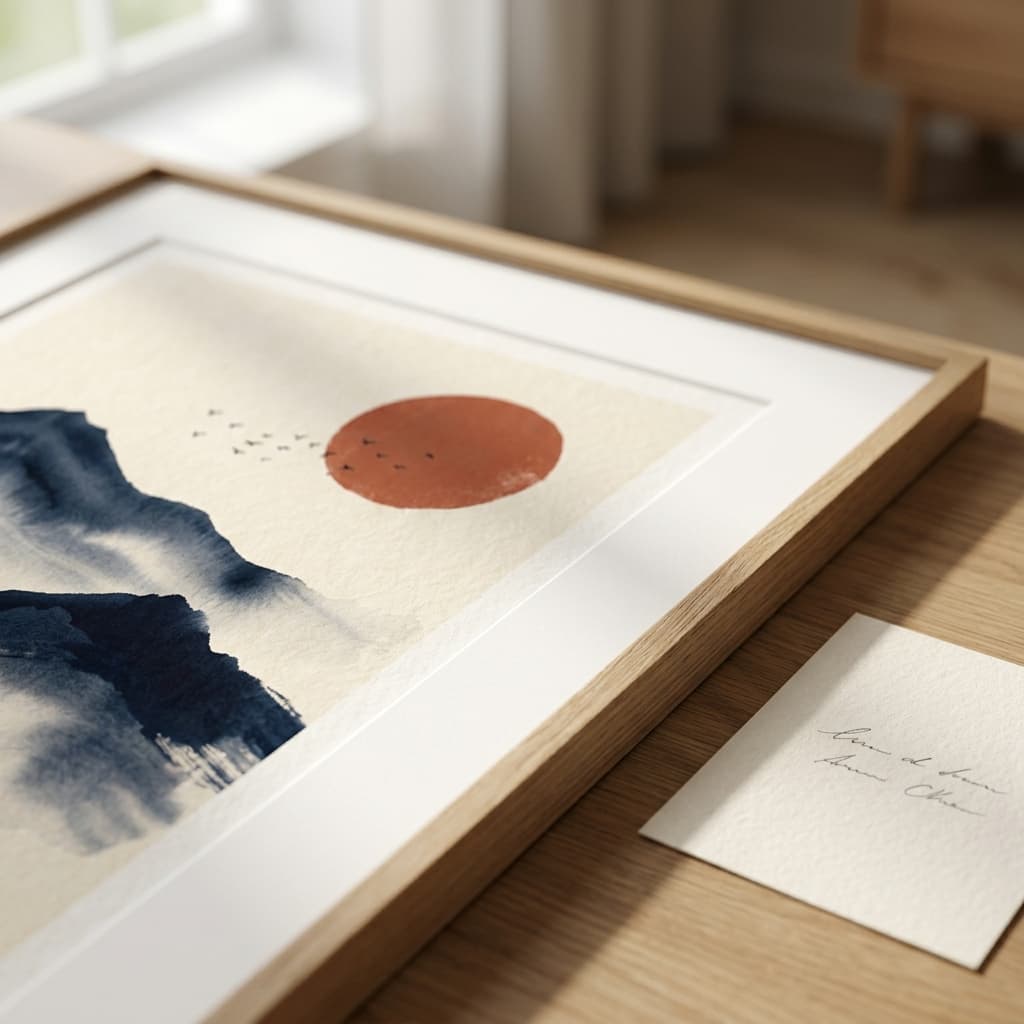
Inside / Framing / Contents
Page spreads and set contents for stationery; mat, frame profile and mounted edge for prints.
For stationery the inside is the product — ruling, layouts, what is actually in the set. For a print it is the finish: the mat, the frame profile, the mounted edge. Either way it answers what the exterior shot cannot.
- Optional
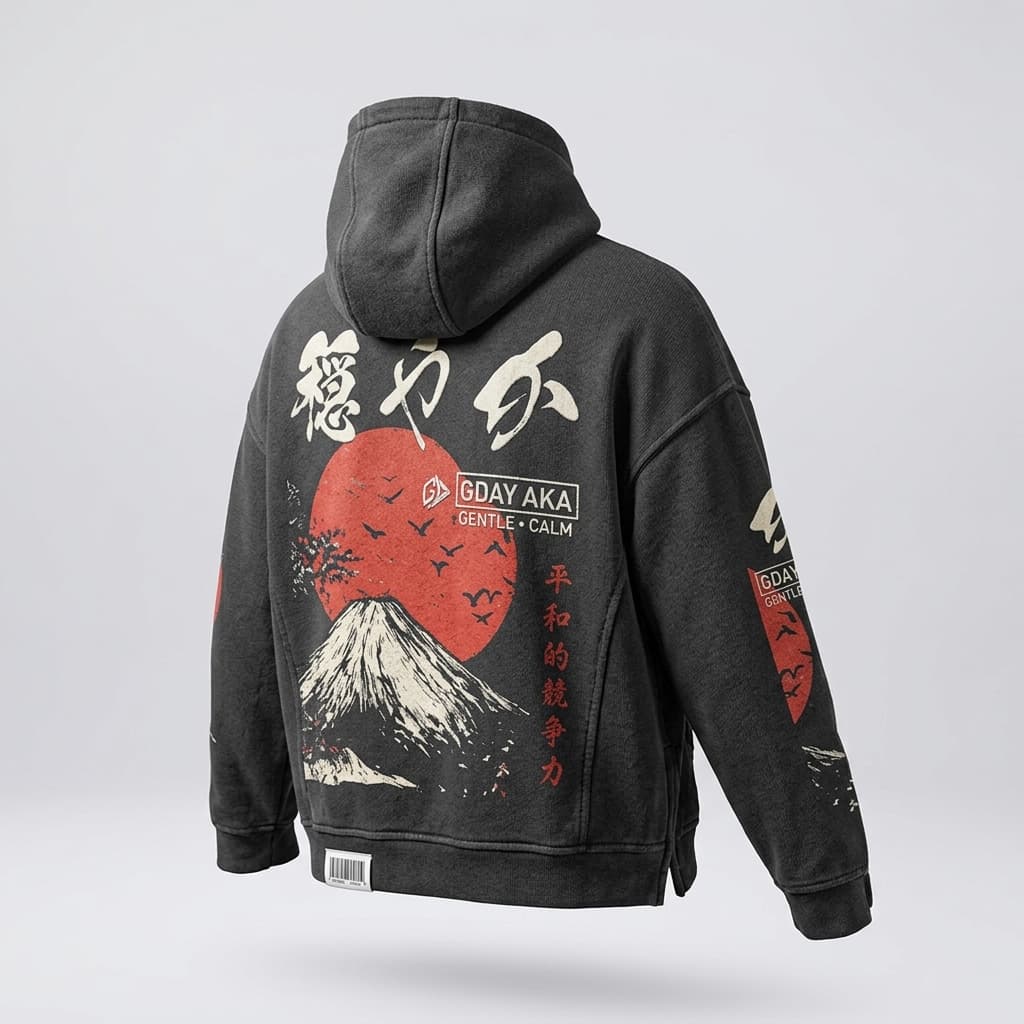
Visual Story
AI-generated video bringing the product to life across multiple angles.
A short clip does what a still cannot: it turns the product through several angles in one continuous take, so the shopper sees how it catches the light and how the parts relate. AdaptiveIQ generates this from your hero shot, so it costs nothing but a click.