Outdoor & Camping
For tents, sleeping bags, stoves, packs and camp furniture, where a buyer is deciding whether this will keep them warm, dry and safe.
How the sequence works.
Shoppers move through a listing in order, and each frame has a job to do before the next one matters. Here is what every shot in this template is for, and what it costs you to leave it out.
- Required
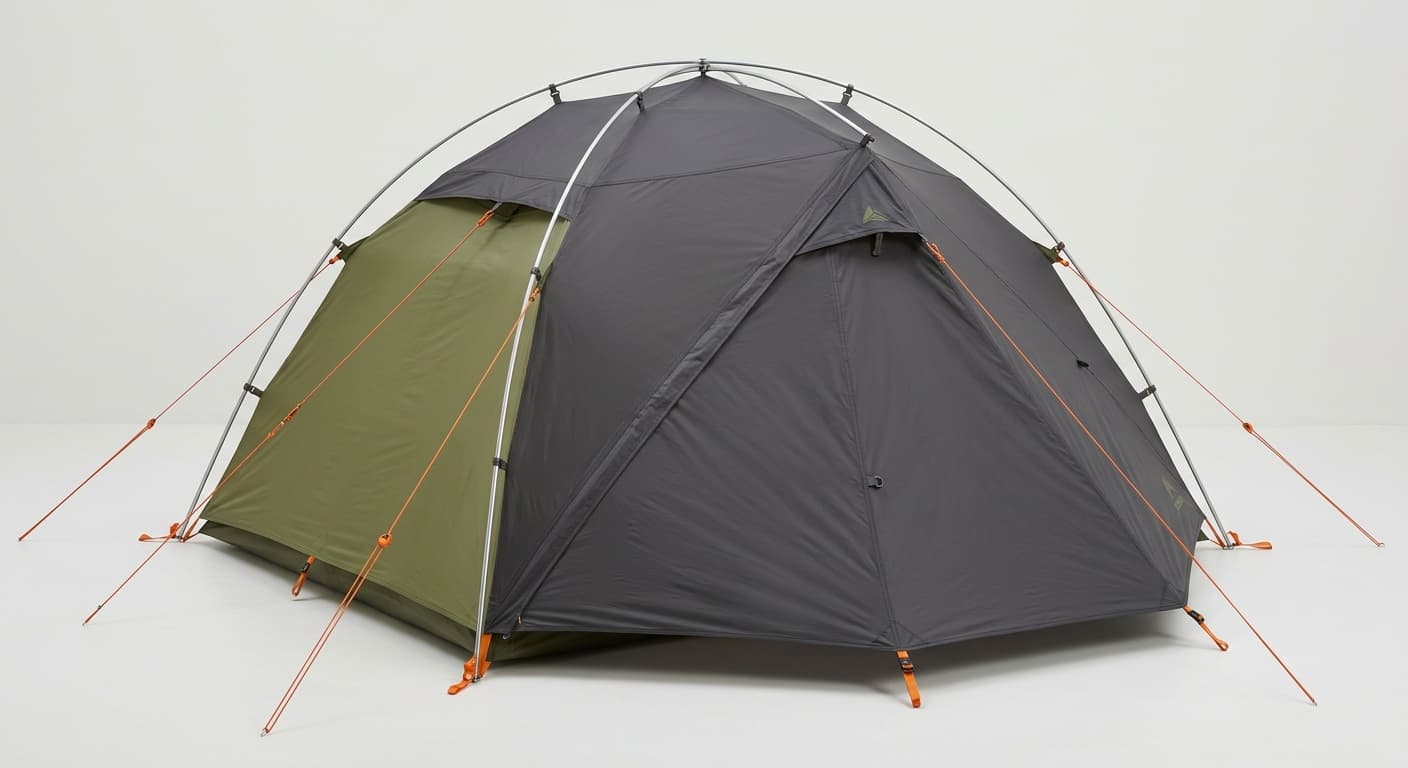
Hero Product Shot
The product set up - pitched, opened or lofted - fully in frame on a plain light ground, fabric taut and poles straight.
Show it the way it will be used — pitched, opened, lofted — never still in its sack. A tent photographed slack or half-pegged reads as a tent that will not hold, and nothing in the listing recovers from that. Keep fabric taut, poles straight and the whole thing in frame with a clear margin: a cropped guy line or corner is the fault shoppers notice first.
 Required
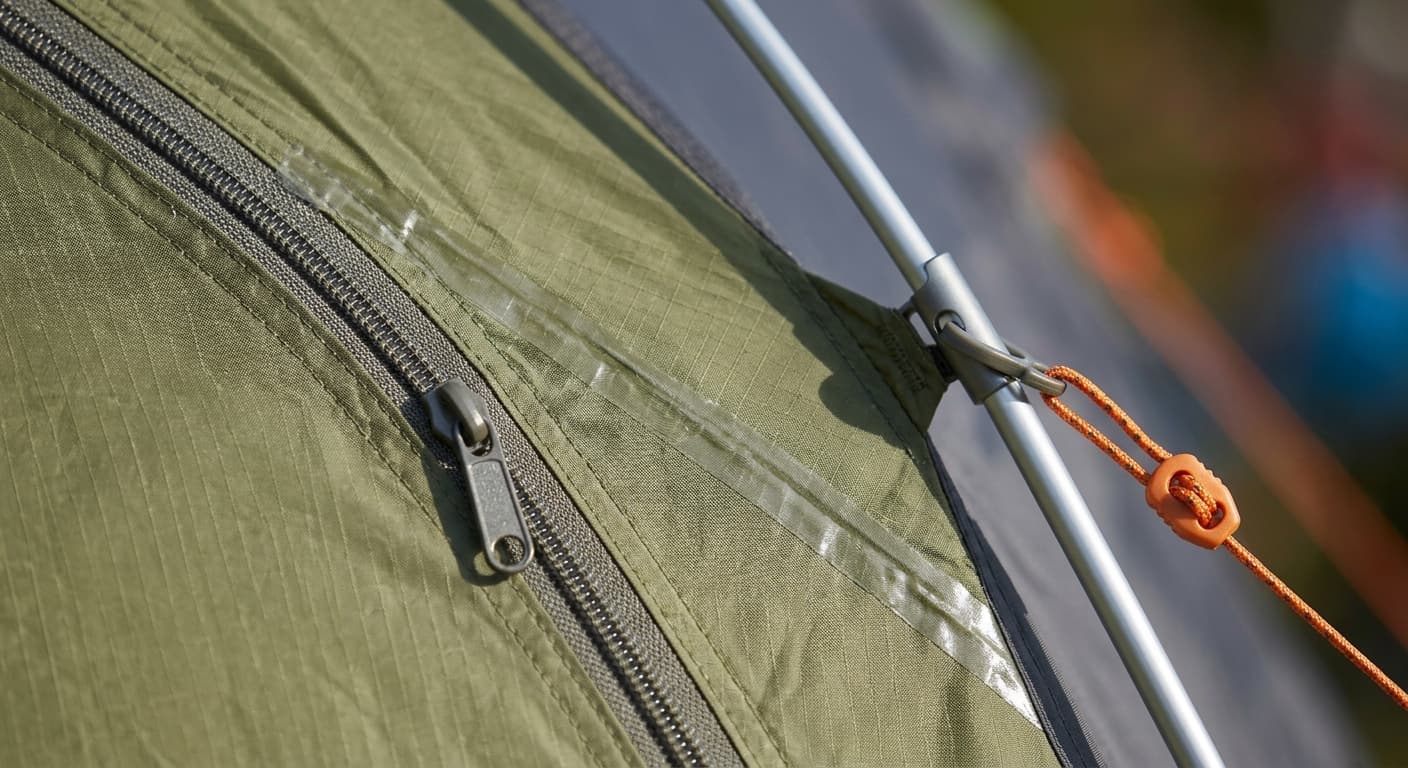
Material & Construction Detail
A weave, taped seam, zip, pole joint or valve filling most of the frame, sharply focused under raking light.
This is where a buyer decides whether it will keep them dry. Fill the frame with one real feature — the weave, a taped seam, a zip, a pole joint, a valve — and light it from the side so coating and stitch depth read. Do not let a generated image print a figure on the fabric: a waterproof rating, a denier number or a temperature that is not on the real product is a safety claim you did not make and cannot stand behind.
 Optional
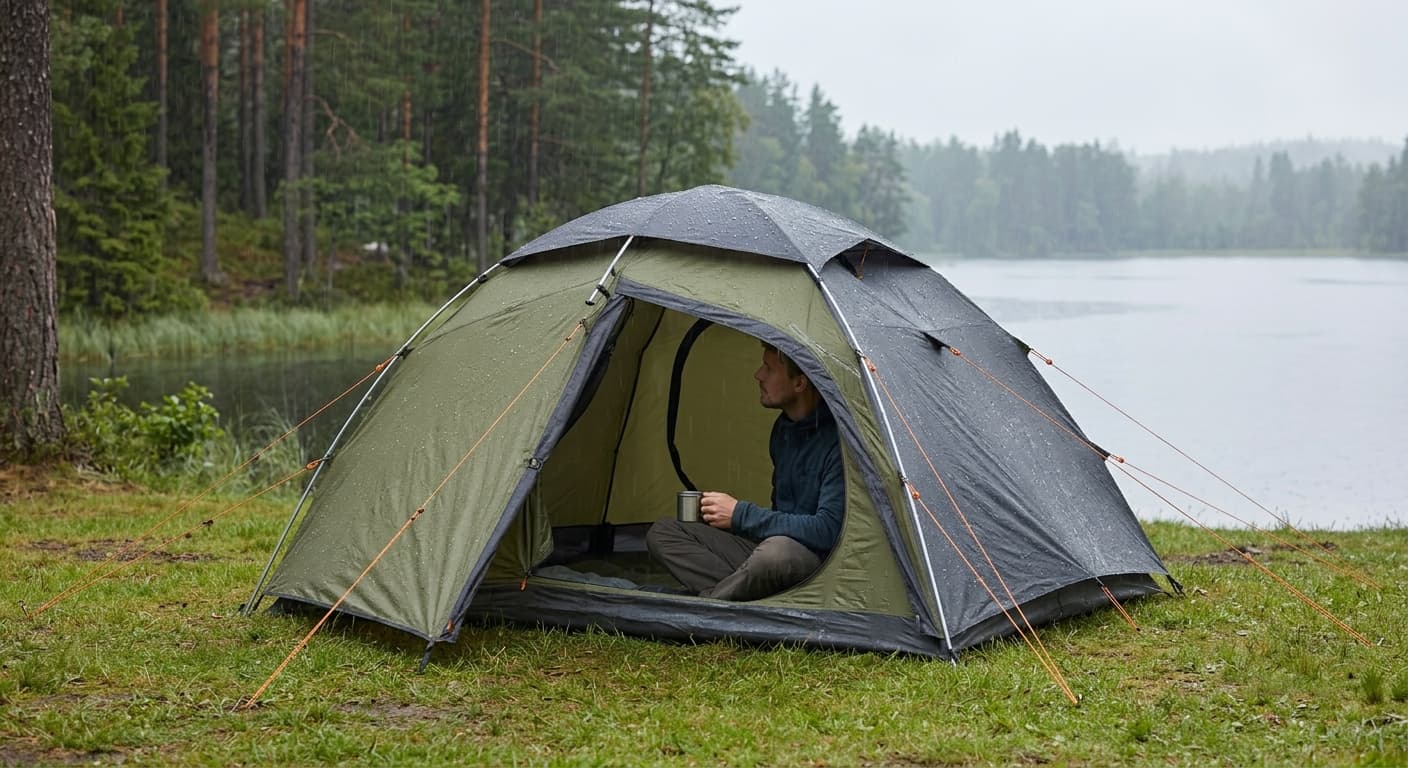
In-Use Outdoors
The product used correctly outdoors on real terrain, properly pitched and clearly visible in natural light.
Real terrain, pitched and guyed properly, in daylight. Two things turn this shot into a liability: unsafe practice, such as a stove burning inside a tent or a flame against fabric, and weather beyond what the product is rated for. A tent shown in a blizzard is claiming a four-season rating whether or not the description does, and shoppers hold you to the picture.
 Optional
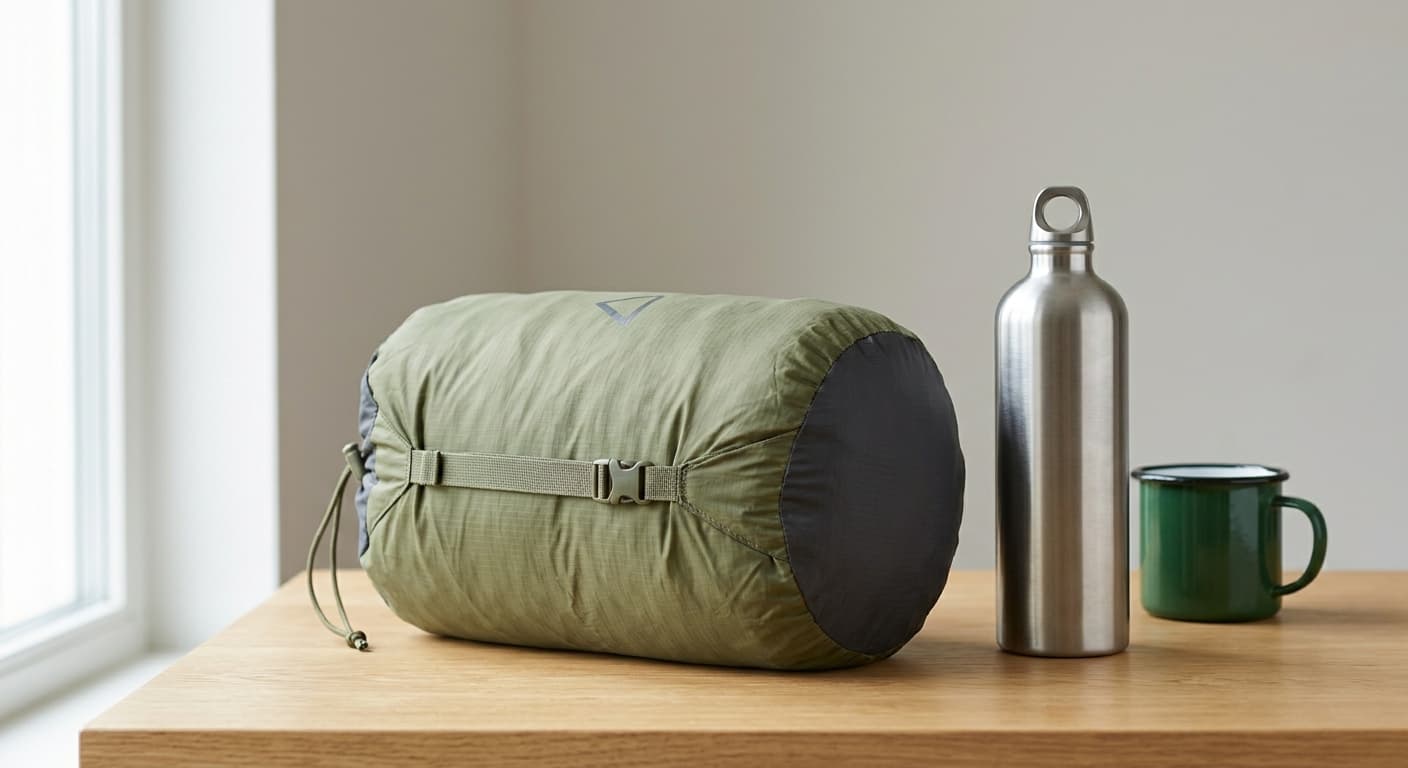
Packed & Set-Up Scale
The packed bundle beside a familiar object, plus the set-up product beside a person or chair, so real size reads at a glance.
Packed size decides more purchases in this category than almost anything else, so give the shopper something familiar to measure against — a bottle, a mug, a person, a chair. Show both states if you can: the bundle as it travels and the product as it stands. Keep it honest against your stated dimensions; a pack flattered smaller than it is comes back as a return.
 Optional
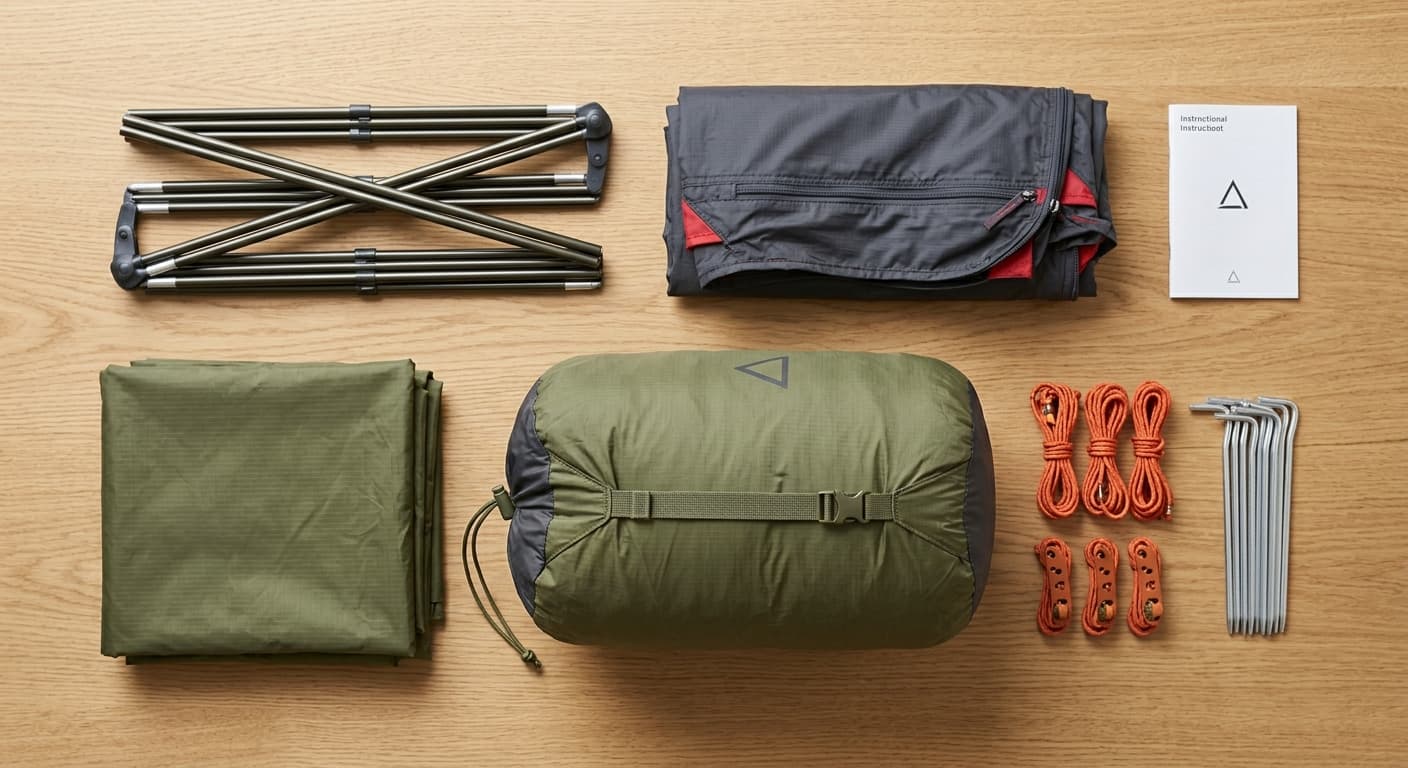
Features & Components
Everything in the box laid out evenly - poles, pegs, guy lines and sack - with vents, pockets and valves legible.
Lay out exactly what is in the box — the main item plus poles, pegs, guy lines and the stuff sack — evenly spaced with nothing overlapping. Counts matter here: a shopper who counts three poles in your photo and finds two in the bag has been misled, and a generated image will invent a joint or a peg without hesitation. Nothing in frame that is not genuinely supplied.
- Optional
Visual Story
AI-generated video bringing the product to life across multiple angles.
A short clip does what a still cannot: it turns the product through several angles in one continuous take, so the shopper sees how it catches the light and how the parts relate. AdaptiveIQ generates this from your hero shot, so it costs nothing but a click.