Coffee
For roasted coffee sold to be brewed, where the pack has already made three promises the photograph has to keep: the roast level, the origin and the grind. Show beans for a ground coffee and you have pictured a product you do not sell.
How the sequence works.
Shoppers move through a listing in order, and each frame has a job to do before the next one matters. Here is what every shot in this template is for, and what it costs you to leave it out.
- Required
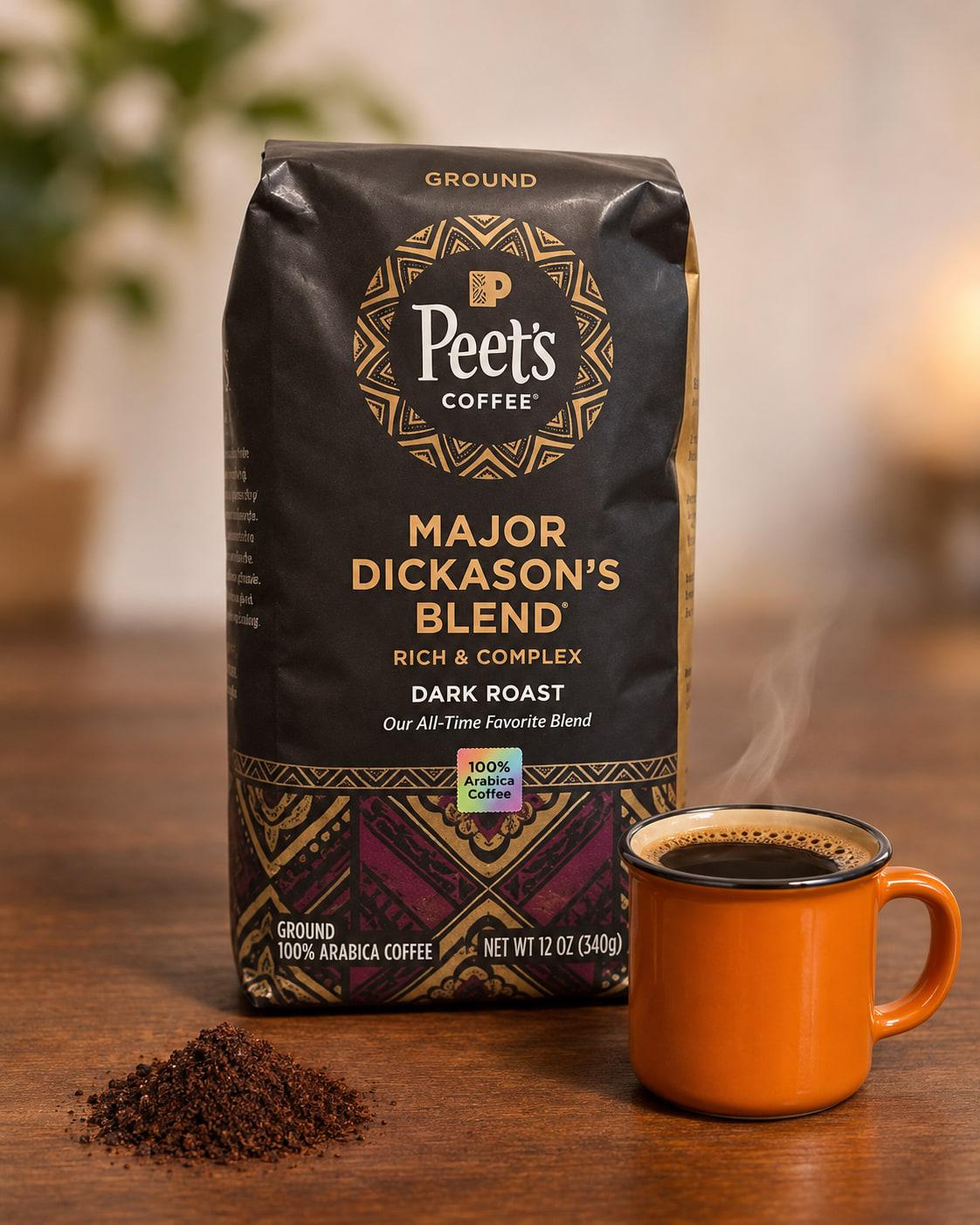
Appetite / Hero Shot
The pack upright with a little of its own grind or a fresh cup beside it, warm light, shallow focus. This is the frame that earns the click, so the coffee next to the bag has to be the form the bag actually sells.
 Required
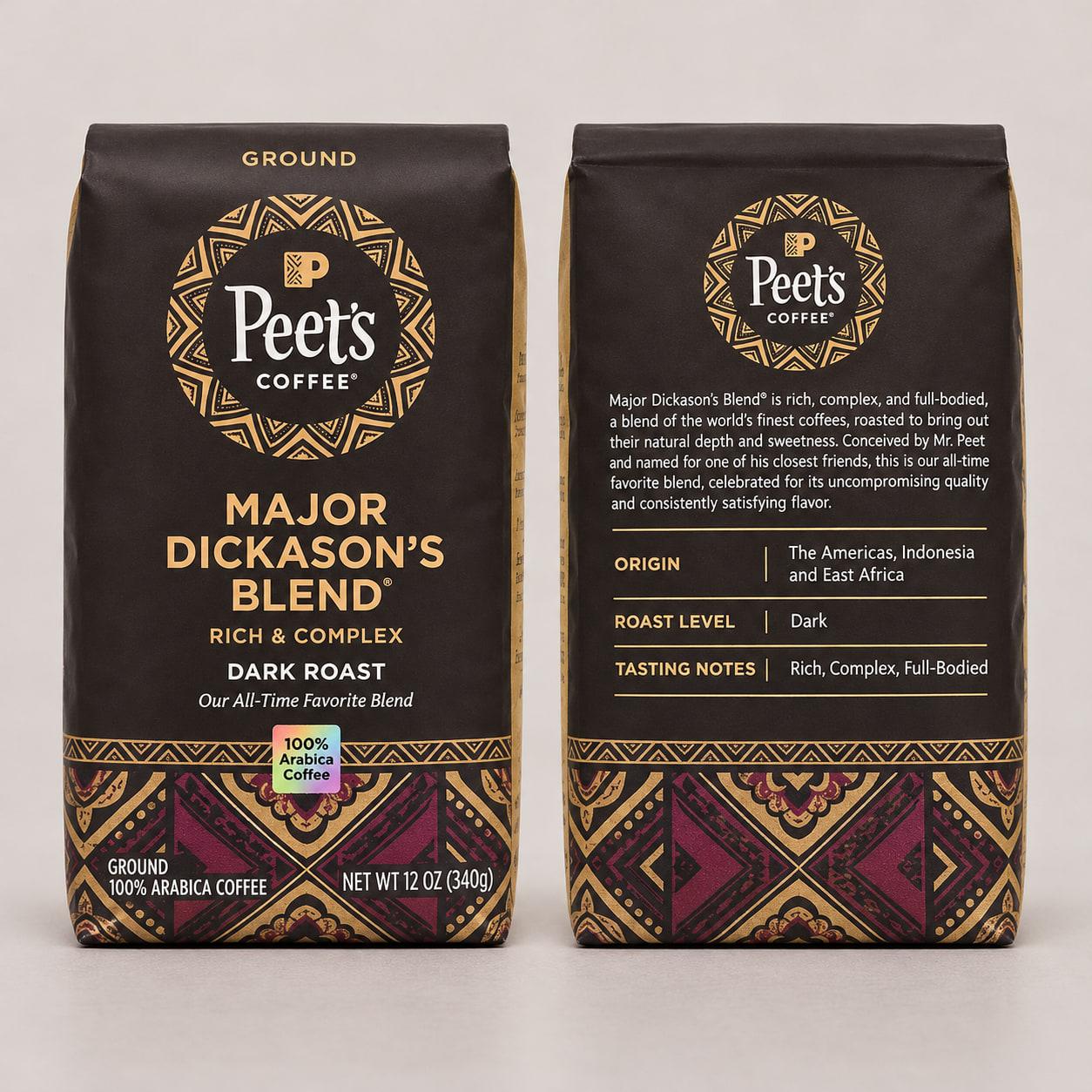
Package / Label Shot
Front and back side by side on a neutral ground, both square to camera. Roast, origin, net weight and certifications are what a coffee buyer compares, and they all live on these two panels.
 Required
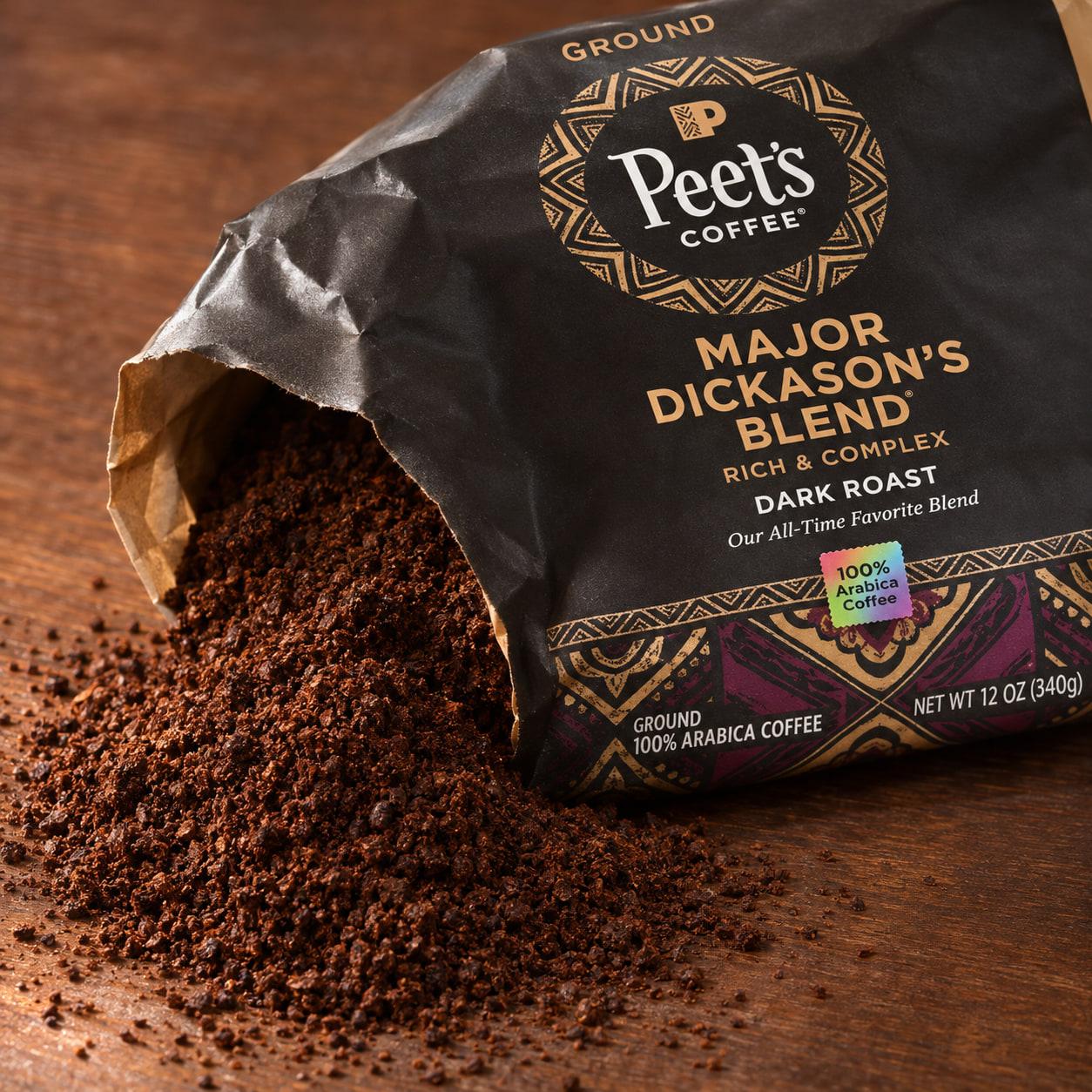
Bean / Roast Close-Up
A macro of the beans or grounds spilling from the open bag under raking light. Freshness and strength are read straight off this colour, so it has to be the roast level the label prints and the grind the pack really contains.
 Required
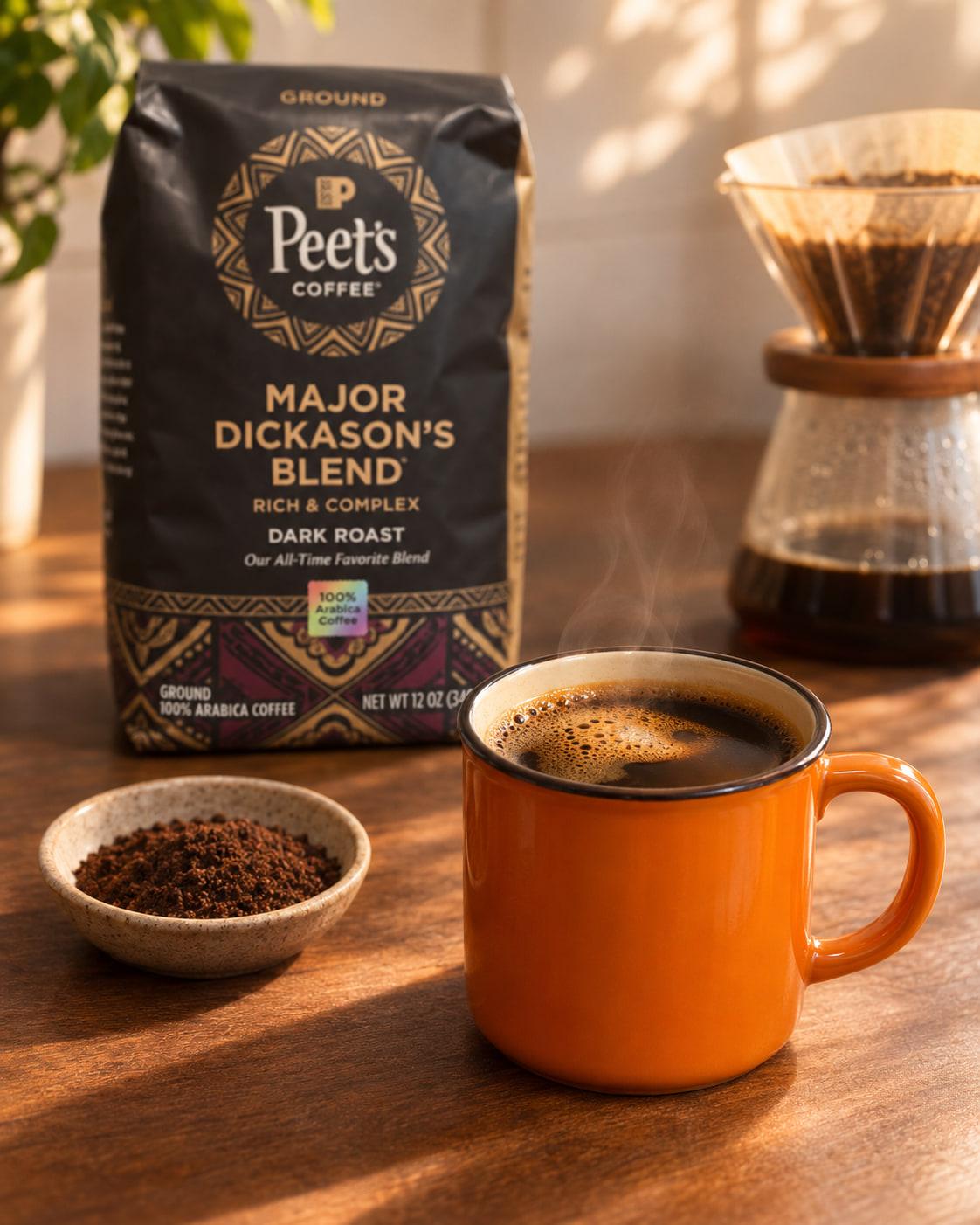
Brew / Serving Context
The coffee brewed the way the pack suggests, bag soft behind, warm morning light. This is the prepared result the buyer is paying for, so the colour in the cup and its crema have to belong to this roast and this method.
 Required
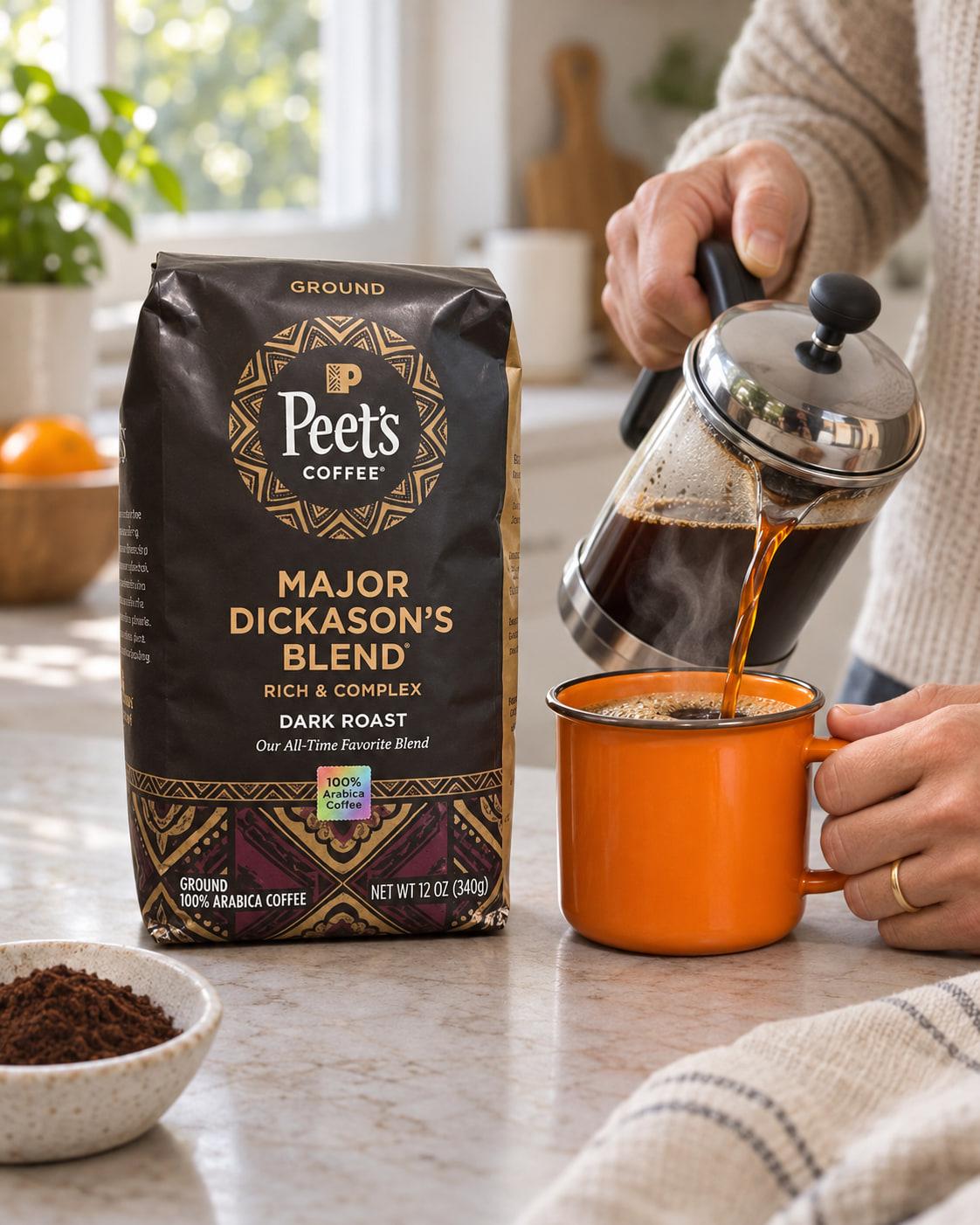
Lifestyle / Ritual
An adult mid-ritual in a bright kitchen, pack in frame with its label to camera. Coffee sells on the occasion as much as the cup, and the scene is busier here, so the bag has to work harder to stay itself.
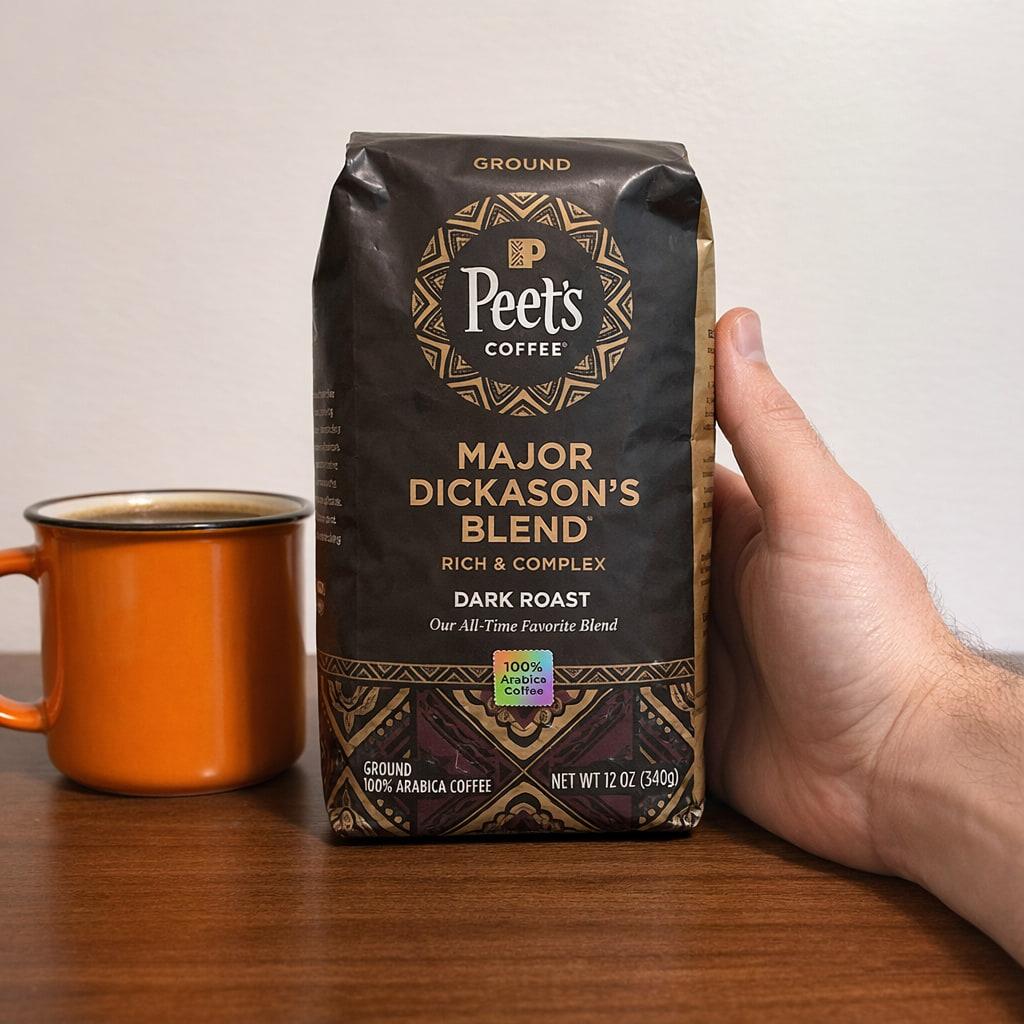 Required
Scale / Size Reference
The pack beside a standard mug and an adult hand. A twelve-ounce bag and a two-pound bag look identical in a cropped hero shot, so the size here has to be the one the printed net weight implies.
- Optional
Visual Story
AI-generated video bringing the product to life across multiple angles.
A short clip does what a still cannot: it turns the product through several angles in one continuous take, so the shopper sees how it catches the light and how the parts relate. AdaptiveIQ generates this from your hero shot, so it costs nothing but a click.