Bags & Luggage
For totes, backpacks, briefcases and suitcases, where capacity and build quality decide the purchase and the return.
How the sequence works.
Shoppers move through a listing in order, and each frame has a job to do before the next one matters. Here is what every shot in this template is for, and what it costs you to leave it out.
- Required
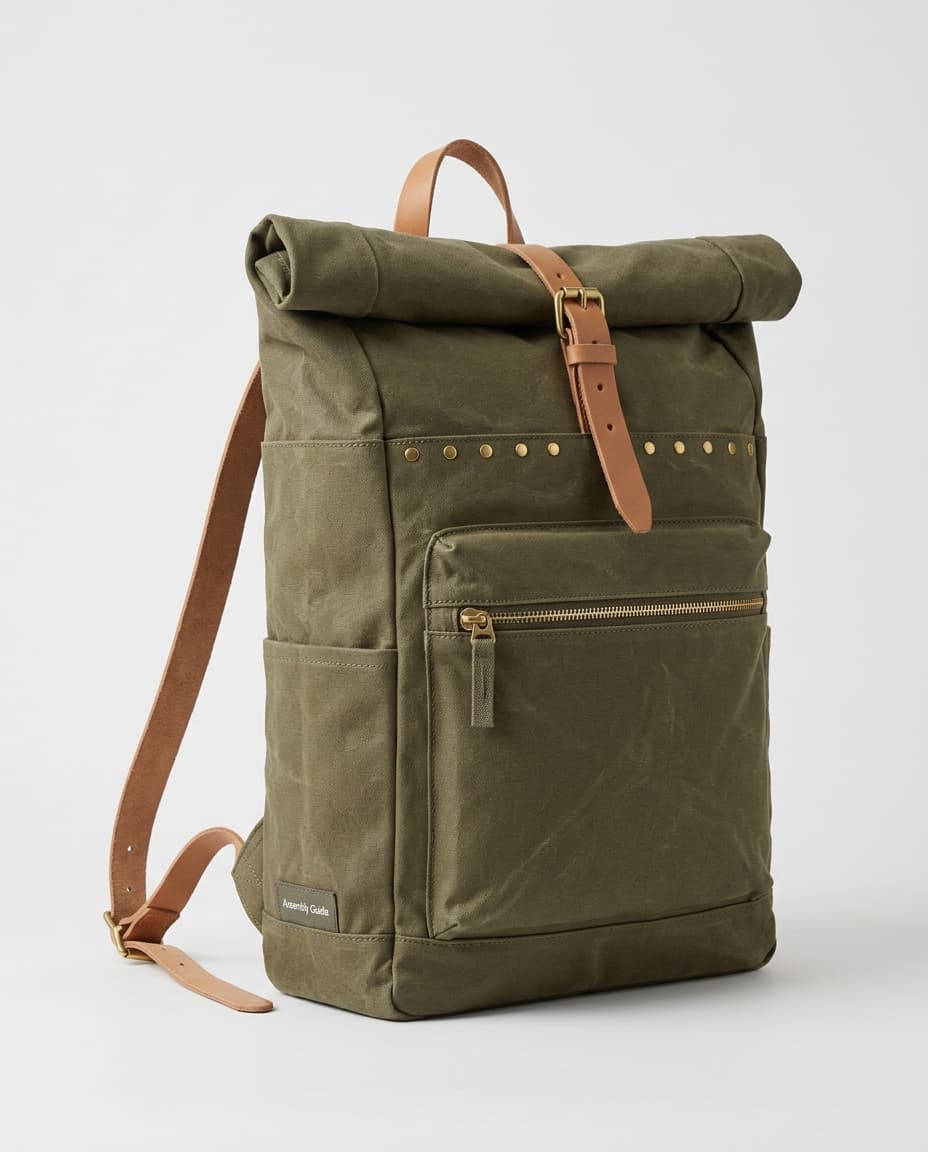
Hero Product Shot
One bag fully in frame on a plain light ground, filling 65-85% of the frame, holding its shape with hardware legible.
Keep the whole bag in frame with a clear margin — a cropped handle or strap is the single most common fault in bag listings, and it reads as carelessness before anything else registers. One bag, no props, on a plain light ground, filling about three quarters of the frame and holding its own shape rather than slumping.
 Required
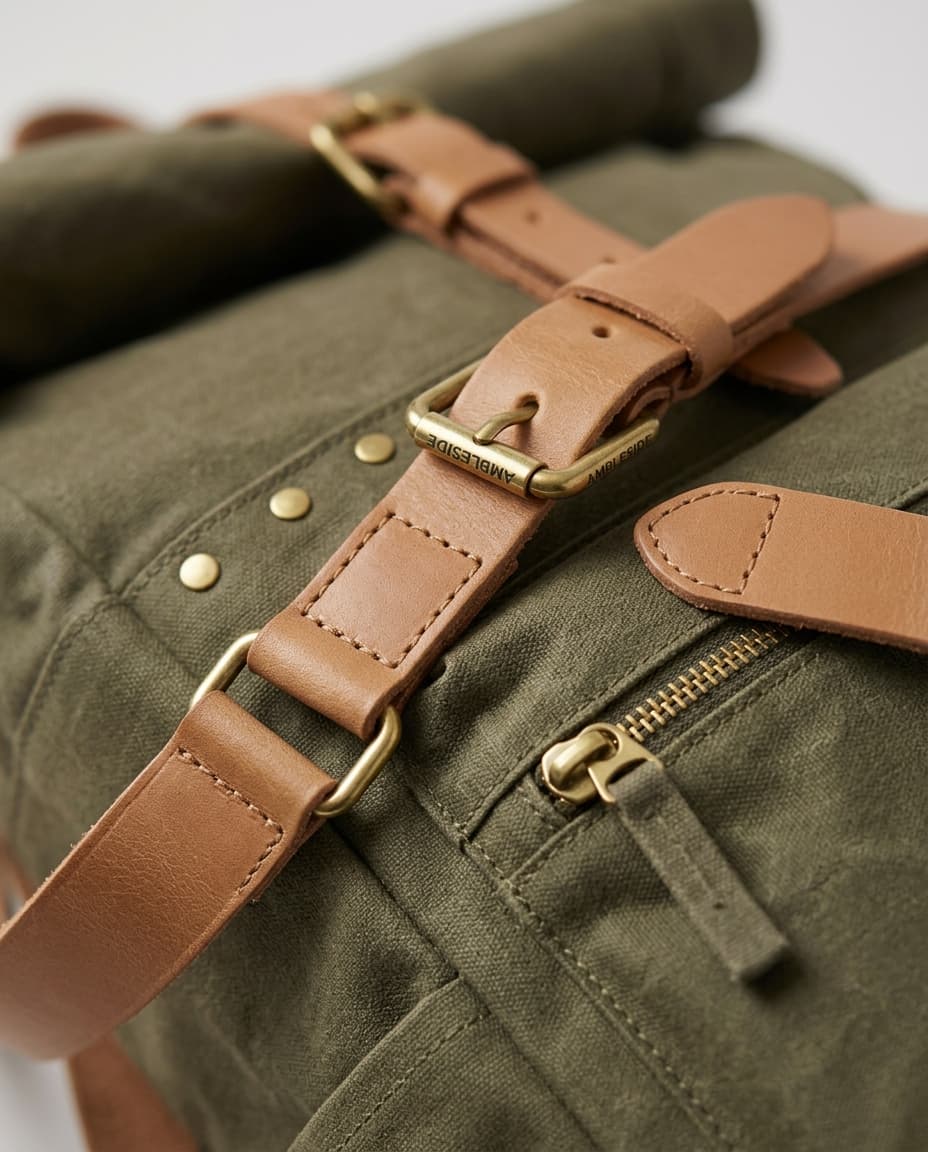
Material & Hardware Close-Up
A zip, buckle, stitch line or grain filling most of the frame, sharply focused under raking light.
Zips, buckles and stitching are where a bag’s price is justified or exposed. Fill the frame with one feature and light it from the side so grain and stitch depth read — flat frontal light flattens exactly the texture a buyer is trying to judge.
 Optional
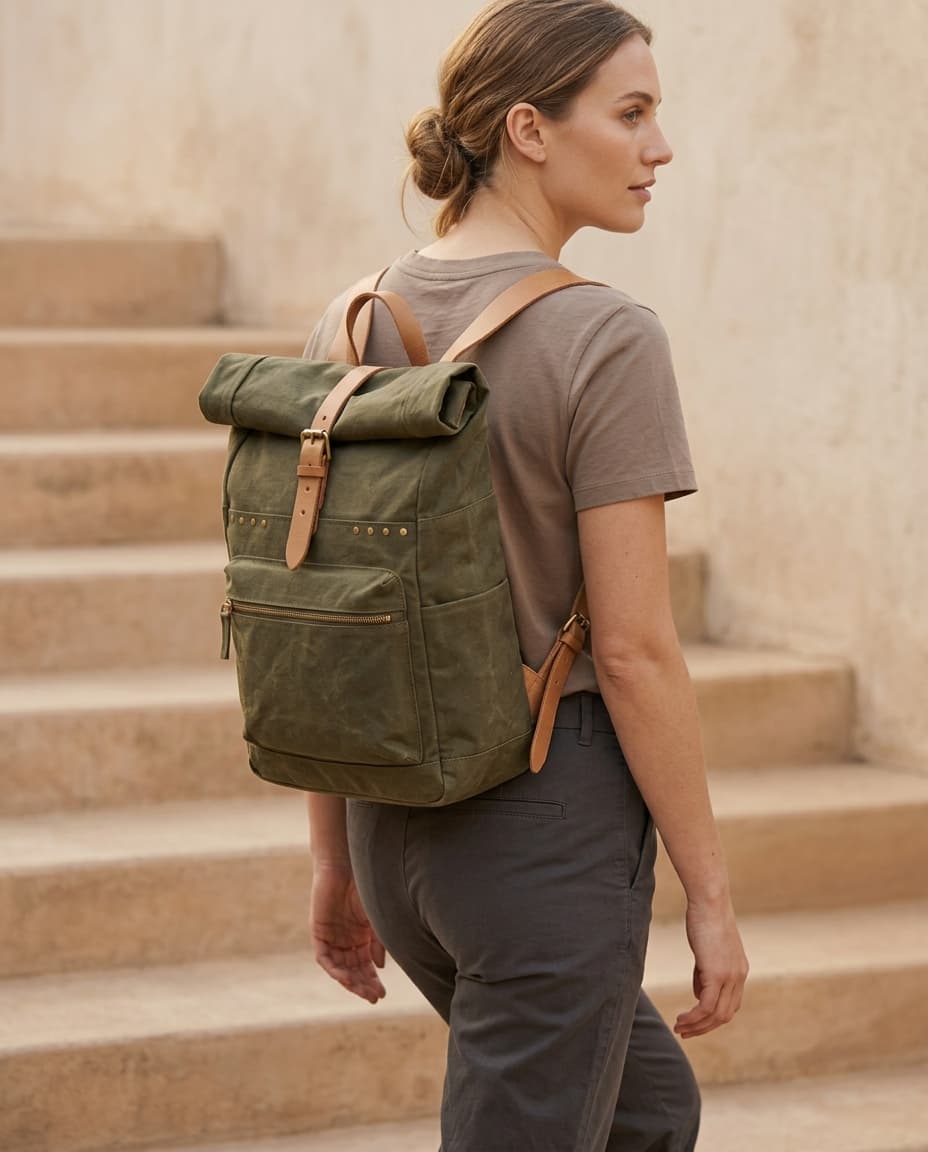
On-Body / Carry Shot
The bag carried the way its type is actually carried, straps flat and the bag clearly visible.
Carry it the way the bag is actually carried: a backpack on the back, a crossbody across the torso, a tote in the hand. Straps should lie flat and untwisted, and the bag should stay largely unobstructed — an arm across the front hides the thing being sold.
 Optional
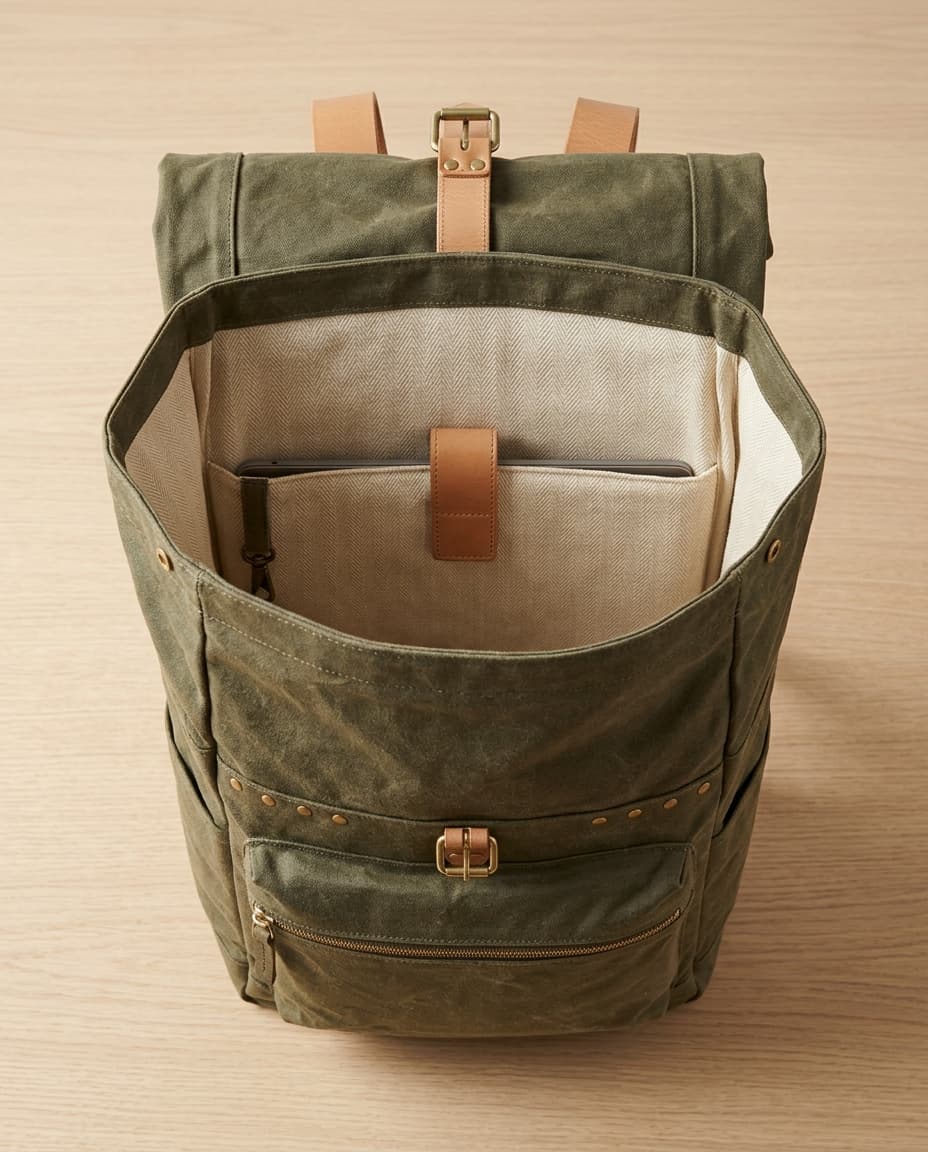
Interior & Organisation
The bag open with compartments and dividers legible, evenly lit and tidy.
Open it fully and shoot from the front, slightly above, so pockets and dividers are distinguishable. Light the inside properly: an interior crushed to black tells a shopper nothing, and organisation is most of why someone picks one bag over another.
 Optional
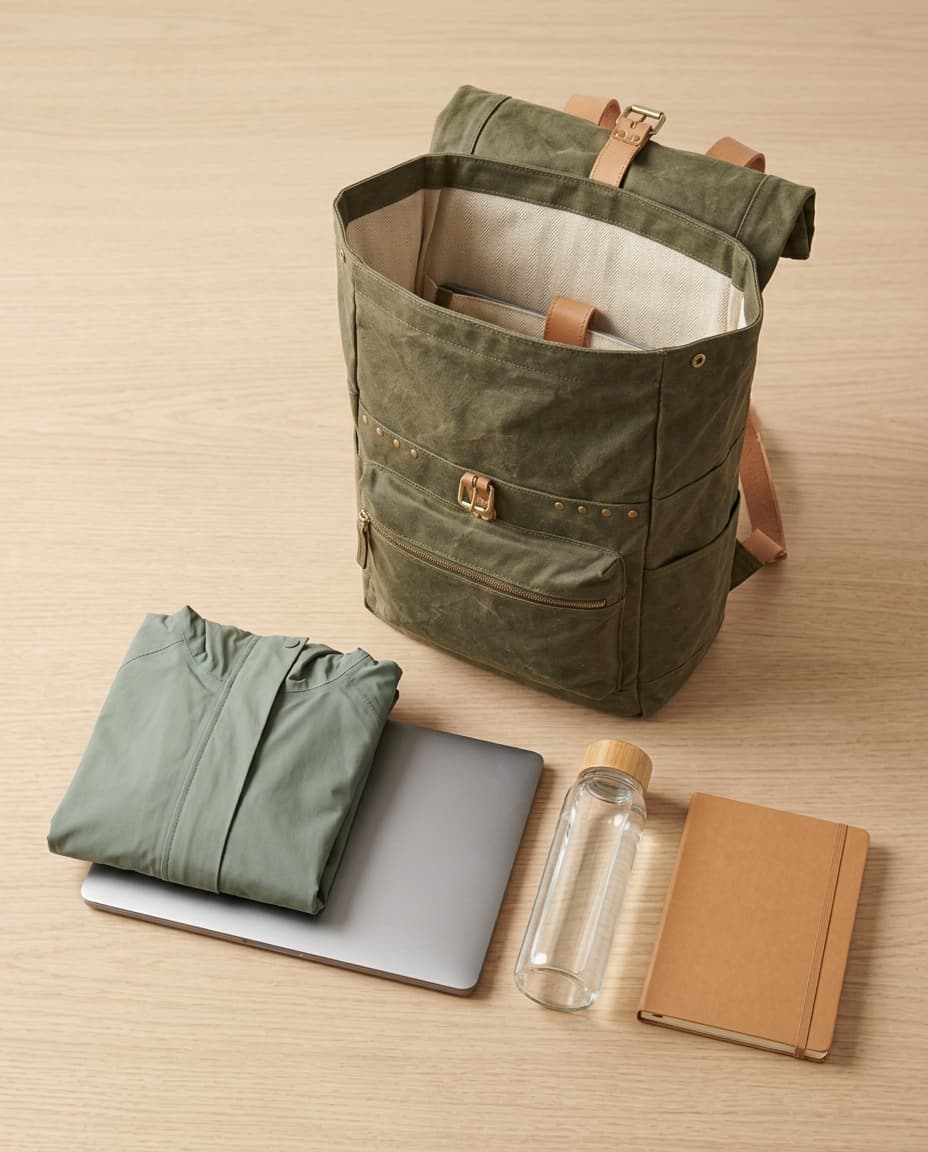
Capacity & Scale Context
Two or more familiar objects beside or inside the bag so real capacity reads at a glance.
Put two or more familiar objects in or beside it — a laptop, a bottle, a paperback — spaced so nothing overlaps. Keep it honest: showing a 16-inch laptop in a bag that cannot take one is the fastest route to a return and a bad review.
- Optional
Visual Story
AI-generated video bringing the product to life across multiple angles.
A short clip does what a still cannot: it turns the product through several angles in one continuous take, so the shopper sees how it catches the light and how the parts relate. AdaptiveIQ generates this from your hero shot, so it costs nothing but a click.